Tuesday, 10 March 2026
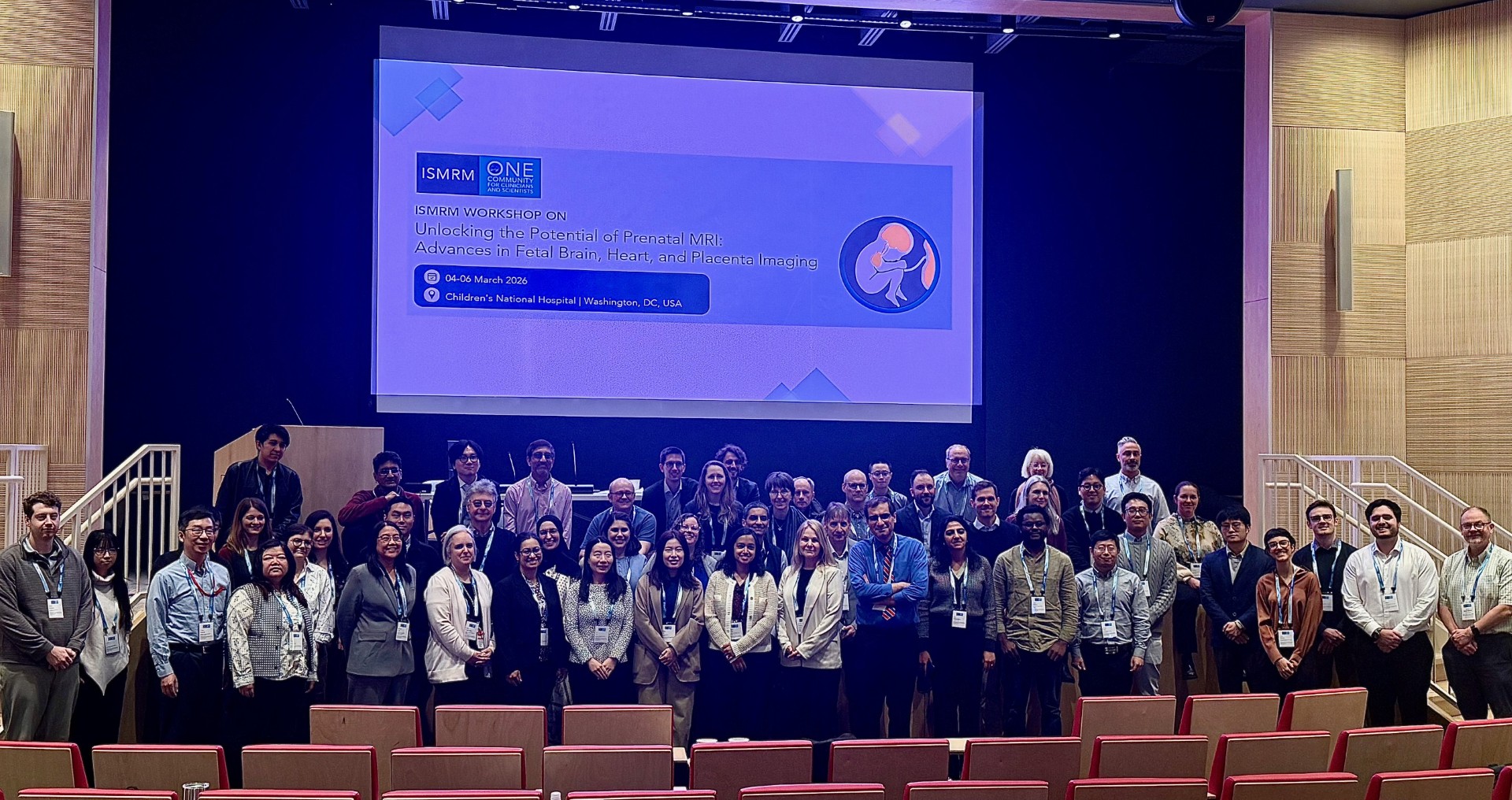
Thank you all who attended the ISMRM Workshop on Unlocking the Potential of Prenatal MRI: Advances in Fetal Brain, Heart & Placenta and for making it a success!
--------------------------------------------------------------------------------------
Workshop Overview
This workshop aims to establish a shared vision for the future of fetal MRI to image the fetal brain, heart, and placenta, as well as exploring the steps necessary for its integration into clinical practice. Key topics will include how to compensate for fetal bulk motion and heart motion; novel 3D reconstruction methods for anatomical imaging of the fetal brain, heart, and placenta; and other novel methods such as fetal 4D flow, T2 mapping to estimate oxygen delivery, and diffusion tensor imaging (DTI) of the fetal brain and placenta. From a clinical perspective, the workshop will address issues around prenatal brain growth and development in fetuses with either intrauterine growth restriction or congenital heart diseases, as well as broader discussions regarding the practical implementation of these methods and potential benefits in clinical practice.
The workshop program will consist of invited scientific presentations, submitted papers, and panel discussions. The scientific sessions are organized into themes and are followed by expert-led discussions led by both Ph.D. and M.D. leaders in the field, offering both scientific and clinical perspectives on the topics at hand. These sessions have been carefully designed to be interdisciplinary and to bring together researchers and clinicians working in the field of fetal MRI.
Educational Objectives
Upon completion of this activity, participants should be able to:
- Discuss motion correction techniques in fetal MRI;
- Describe fast image acquisition and 3D image reconstruction methods in fetal MRI;
- Analyze MRI hardware, pulse-sequence design, real-time acquisitions, and data analysis strategies for fetal MRI;
- Outline recent advancements in DTI of the fetal brain and placenta, including acquisition and processing, tractography and connectivity, microstructure, and hardware advances;
- Discuss the future direction of MRI for fetal brain, heart, and placenta imaging;
- Examine anatomical and physiological properties of the fetal brain, heart, and placenta, and their changes throughout gestation, and differences in heart and brain structures and function between normal fetuses and fetuses with either intrauterine growth restriction or congenital heart disease;
- Summarize current techniques for non-invasive monitoring of fetal brain, heart, and placenta physiology and function; and
- Identify biomarkers associated with fetal brain, heart, and placenta morphology and function that can be characterized by MRI.
Target Audience
Fetal magnetic resonance imaging (MRI) of the fetal brain, heart, and placenta have seen rapid development over the last 5-10 years with a host of new methods, protocols, and post-processing tools now successfully implemented by various centers around the word. This workshop is specifically designed for MRI scientists, including Ph.D. students, postdoctoral fellows, and faculty members; clinicians such as neurologists, cardiologists, radiologists, and surgeons; as well as MRI technologists and nonprofit and academic institutions interested in improving fetal MRI and integrating it into clinical practice.
This workshop is designed to meet the needs of a wide range of participants and provide valuable information and opportunities for learning, collaboration, and growth. It is specifically designed to benefit the following groups:
- MR physicists and engineers who are eager to learn about and implement novel acquisition and processing methods for fetal MRI;
- Basic scientists interested in understanding more about how fetal MRI can improve our understanding of fetal brain, heart, and placenta interactions in human health and disease;
- Clinicians who are interested in applying fetal MRI in clinical practice;
- Technologists who specialize in performing MRI exams of the fetal brain, heart, and placenta;
- Non-profit institutions focused on conducting research in motion correction and 3D image reconstruction for fetal MRI; and
- Industry representatives who aim to discuss the integration of motion correction and image reconstruction techniques with standard MRI platforms.